







I am an independent scholar and author with no institutional funding. Please, consider supporting me on Patreon so I can continue to do the work. Thank you!
About
For more detail consult my C.V.
Some say we are born with our predispositions; others believe our predispositions reflect the social environment that nurtured us. Perhaps, it is a combination of both. In any case, ever since I could remember, I was driven by a persistent sense of justice and it could be that this predisposition was fostered by having grown up at the crossroads of Soviet Russian political opening towards Africa. The Soviet Union made it possible for my mother to leave the tiny village consisting of fifteen houses in the south of the Moscow region to study at the Moscow State University, where she met my father who, shortly after the Sudanese independence from Britain, left his medical studies in Khartoum to reschedule his appointment with destiny and study geology in Moscow. It could be that because I spent my early years in alinguistic silence, I observed with deep empathy how humans treated other humans and our nonhuman siblings and, later, I was overwhelmed with the sense of injustice at the hypocrisy with which people used language to justify cruelty. Everything must have been exacerbated by growing up reading the works of Leo Tolstoy, Dostoevsky, Gogol, Mayakovsky, Akhmatova, inter alios. Whatever it was, my personal choices through life as well as my academic and professional interests have always been nurtured by my desire to contribute to the understanding of social injustice and violence between humans as well as the violence inflicted by humans on other animals and the environment, an understanding, that I strongly believe, is necessary for finding solutions to repair the damage our species has inflicted upon the world.
I was the eldest of five children and to help my parents buy food, I began to work at the age of 10. At the age of 15, I began to skip school to work as the librarian of the Russian Department at the University of Khartoum and at 16 started to work full-time, accepting part-time work typing manuscripts for the university printing press while studying civil engineering, with a year dabbling in fine arts, in the evening programme. But then the Sudanese civil war broke out. There were almost daily upheavals and student demonstrations with fatalities. I observed the desertification crawling in from the north meter by meter. After 3 years of engineering, I quit those studies to cover war for The Sudan Times, simultaneously working double time in “development” helping the displaced victims of war from Chad, South Sudan, and Eritrea. But my goal was to find permanent solutions to war and desertification, not the superficial, political, neo-colonial, essentially temporary, remedies the “international” (aka Western or Northern) projects implemented. After my interview with the leader of the SPLA, the separatist army, Colonel John Garang received wide publicity (it was broadcast on BBC and Voice of America), I found myself, along with my fellow journalists at Sudan Times, to mildly put it, “in trouble” with the regime. At the time, I received full scholarships at some of the top colleges and universities in the U.S. (Smith and Williams were among them) and choosing Bryn Mawr College, I gladly embarked on my second undergraduate education in humanities and social sciences. Seeking answers to the root of war, national identity, gender, and humanism led me to double major in comparative literature and Russian Studies at Bryn Mawr College, with a focus on history, sociology, and anthropology culminating in my B.A. thesis on historical and fictional narratives of nationalism. Tahar Ben Jelloun’s L’enfant de sable was a particularly poignant work of fiction that delved into the intersections of gender, nationalism, the imaginary, and violence.
Upon graduation in May 1993, I received the Thomas J. Watson Fellowship to study the encounter between Muslim women in Europe in the intersections of the legal and medical institutions. I attended graduate courses in sociology and anthropology at l’École des hautes études en sciences sociales (EHESS) in Paris and compared this encounter between Muslim women and European institutions in France, Russia, Sweden, and Great Britain. However, just as in my previous pursuits in journalism of war and my undergraduate thesis, this research left me with more questions than answers and hence I went on to graduate studies in social sciences at Stockholm University receiving an M.A. in 1996. I was immediately hired by the Centre for research in International Migration and Ethnic Relations (CEIFO) at the department of Social Anthropology, Stockholm University and began working as a social and medical anthropologist on the 1st of September 1996. This was a comparative project funded by the Swedish Board for Health and Social Work (Socialstyrelsen) and was called Mötet, or The Encounter, in which I examined the meeting between the health culture of Somali refugees and the centralized Swedish health system, while my colleague, a Norwegian anthropologist, looked at the Vietnamese encounter with the Swedish medical sector.
My research into the intersections of cultures and social as well as intimate conceptions of illness and health revealed that our concepts of our illness and health depend on how we understand ourselves as social actors within a specific socio-economic environment. The definitions thus betrayed a deeper dimension to the narrative and the epistemological foundation that informs our praxis. This led me to pursue my doctoral studies in epistemology at the Department of Comparative Literature at the University of Montreal. In my dissertation, titled: Order and the Literary Rendering of Chaos: Children’s Literature as Knowledge, Culture, and Social Foundation (defended at the end of 2011), I explored the ontological and epistemological premises of civilization and wilderness in which children’s literature played the role of an anthropological “field informant” as it served as an illustration of the ways in which violence is structured not only into our relationships with each other and the world, but informs our self understanding, imaginary, perspective, and desires.
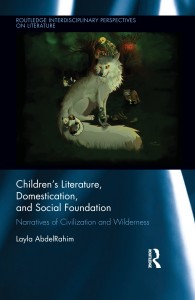
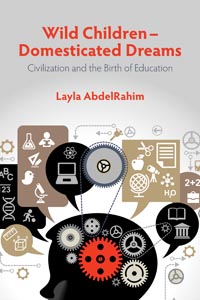
My dissertation was published by Routledge under the title of: Children’s Literature, Domestication, and Social Foundation: Narratives of Civilization and Wilderness (2015) and prior to that I had another peer-reviewed, academic book on the intersections of education with human and animal domestication titled: Wild Children – Domesticated Dreams: Civilization and the Birth of Education (Fernwood 2013).
I am currently finishing work on my third monograph and preparing articles on animal studies and ethology, philosophy of science, ethics, economy, and anarchism.
A more detailed C.V.
watching daisyland again with vanessa, looking into phd, is it good to do in canada? hope you are well, big kisses
Hi,
I saw that you were looking for speaking events in Seattle in late October. I am one of the organizers of the Seattle Anarchist Book fair, and a couple of us would be interested in helping try to put something together. What are you needs around speaking events (stipend, place to stay, etc?)
Hi Layal! My name is Rachel, we met on the train while you were on your way to albany! I’m so happy that we did meet because I have a couple questions for you. If at all possible, would you be interested in giving a lecture at my school Penn State Behrend some time in the spring? I talked with my anthropology professor and she agrees that it would be great for her Cultural Anthropology class. If you can, I would love to talk about details 🙂 The best way to get in touch with me is my email address at rrk5087@psu.edu
Best, Rachel
Hello Layla, I want to thank you for sharing John Zerzan’s 2008 talk in montreal.
Hello!
I would love to find out the best way to get wholesale copies of your book for our shop Oldowan Distribution. We are the distribution arm of Black and Green. John Z always highly recommended your books and, while I have yet to read them, we have people expressing interest and I always take John’s opinion seriously. I would love to read through as well. Let me know what works best!
Steve
Editor Black and Green Review/One-half Oldowan Distribution
oldowandistribution.bigcartel.com
does she have any siblings
Hello Steve,
I sent you a message with the info to the Oldowan Distribution email. I’ll also post the info here for the general public. The distributor for “Wild Children – Domesticated Dreams” is Brunswick Books:
http://brunswickbooks.ca/Wild-Children–Domesticated-Dreams/
Please, contact them for orders. As for “Children’s Literature, Domestication, and Social Foundation”, you can order it directly from the publisher here:
https://www.routledge.com/products/9780415661102
Layla
Hello Layla,
I am College student aiming for the Watson Fellowship.
I was wondering as someone who has gone through the process,
Would you be willing to get in contact with me on some advice for my project please?
I hope you have a wonderful day,
Gi-Gi