





I am an independent scholar and author with no institutional funding. Please, consider supporting me on Patreon so I can continue to do the work. Thank you!
In Praise of the Wild: Discussion of Jeannette Walls’ “The Glass Castle”
Layla, guest speaker on the programme: In the Motherhood, hosted by Trixie Dumont
CKUT, 6pm Wednesday, 19th March, 2008
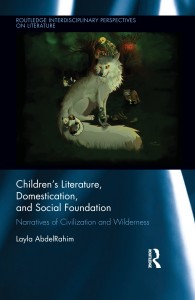
Click HERE (Routledge 2015) for an in-depth analysis of Narratives of Civilization and Wilderness.
Discussion of The Glass Castle by Jeannette Walls mp3
(correction: Of course, I meant “winter” and NOT”summer” when I was talking on the show about the family who melted snow to get water and warmth in Quebec. It must have been my own impatience to get to the sunny time of the year that caused the slip. This year, particularly, the winter has been too generous in terms of cold and snow)


The Walls family’s example is yet another illustration of how the contemporary capitalist world has brought the privatisation of space to perfection – a process that was begun in feudal times in Europe. In this book, we see the Walls family striving to live outside the city, which the parents called oppressive, yet refuses to take possession of land or to farm. However, the dictates of contemporary American society leave no possibility for survival in this world without serving the capitalist (often referred to as humanist) purpose. These norms or regulations and the system of privatisation dictate that some people are allowed to use and own the bodies, effort, time, and space of other humans, animals, and plants. Those who have been designated as resources are forced to pay the owners/landlords to live or eat or drink in this world.
The Walls family attempted to flee the City and its rules of capitalist exploitation, even if, often, they were forced to work in mines and pay “rent” to the individuals who owned the mining business and whom these exploited workers, impoverished by the unjust appraisal of their time and effort, made rich. In other words, huge percentages of their paychecks were extorted for the permission to live in horrendous living conditions in shacks, sometimes without utilities, such as the toilet or bathroom.
Jeannette Walls comes forth with great courage to unveil her past and invite the judgmental, merciless, and civilised voyeurs into her life. She accomplished the task without denigrating the people, who, as long as – and in the best way – they could, protected her from the humiliations of a rapist and murderous culture, we call civilisation and its concocted “scientific” evidence called “Darwinism” that, supposedly, justifies the complete annihilation of any thing that might threaten the possibility to hoard more resources and power for the future of the powerful and the wealthy. The “civilised” “scientists” call it competition, or the survival of the fittest, and by grounding it in nature, justify it as natural and inevitable. The Walls family refused to participate.
While in an autobiographical narrative we still face the problems of distortion, memory, and the changes in perspectives over time that make any biographical account problematic material for drawing anthropological conclusions, there remain even more problems with “professional” ethnography. Therefore, memoirs continue to have a strong appeal in the study of both the author, the “reality” and the experience that the author depicts, and most of all the society that reads and reacts to that material in specific ways.
In this radio discussion, we mostly discussed the issues of child welfare, a concept that is politically chiseled to serve political and economic needs and which is therefore highly problematic, sensitive and a relative cultural concept.
For example, child labour is forbidden in the civilised world. We find this norm surfacing at a time when it has become more profitable to squeeze two working parents to pay for the paraphernalia of childhood, such as toys, text-books, tuition, etc. – all of which serve capitalist interests. Anthropological research on childhood shows how in the wealthy “north” the phase of childhood has been extending well into one’s 30s, but in the countries on whose labour the north has built its wealth, it is still what it has been for David Copperfield and although we hear the “sensitive” “humanitarians” emphatically express “horror” for and “disapproval” of poverty and abuse, their stores are still filled with customers hunting for “deals” on products made by the abused people of all ages in China or Mexico, or….
The Walls family opted to avoid the civilised system of relations and division of resources. Statistics Canada offers many insights to support the position that, in fact, the poor workers are in a worse situation in terms of health, length of life, and general well-being than someone who is “poor” but refuses to give her time and effort to an employer. (link: http://www.phac-aspc.gc.ca/dca-dea/publications/healthy_dev_partb_1_e.html ). In other words, poverty, or the lack of access to resources, time, and space in the case of parents who do not work is, still, less neglectful than in the situation where both parents work on minimum wage and small children in impoverished neighbourhoods of the capitalist America walk home from daycare or school and play in the ghetto hungry and alone because their parents are cleaning up for someone else or caring for other people’s children and well being.
For me, to see how the Walls family stuck together in the desert, appeared to be a healthier alternative than the splintered childhoods in daycare, schools, after-school extensions or, even worse, the destitution of drug and prostitution driven neighbourhoods of the City.
The radio discussion of The Glass Castle
Time was short, and some important points remain untouched. Here, I elaborate some of them:
- Mental health and normalcy versus mental disability and illness:
The definition of mental health is the ability of the mind to process information about “reality” that would allow the person to successfully integrate in that reality.
But what if the understanding and the view of “reality” that one group of people imposes on others does not correspond to the “real” reality out there nor is representative of the possibilities for other realities?
A good illustration here is the “scandal” with the pastor Jeremiah Wright during the American presendtial elections in 2008. Everybody knows that black people did not arrive on a Baltic cruise-ship on a vacation in North America. African people had their own cultures and communities, prior to the Europeans inscribing them in the category of “human resources”, from which they were kidnapped, half of them killed, and the survivors shipped off in shackles and blood in horrendous conditions across the sea to build the privileges of the white people in America who have, by that time, dealt swiftly with the dispossession of the Native peoples of their rights to the American land. Shackles, death, and pain are the heritage of the American Black people. Yet, when they express anger and dismay, they are being called racist!
Everybody knows that symbolic, cultural and material capital influences health, happiness, and longevity and that these aspects of wealth are accumulated through generations and transmitted accordingly. Everybody knows that the black people who did not arrive on cruise-ships on a vacation – they were captured as slaves and raped in all the meanings of the word – were brought to North America by force to serve the wealthy. They were stripped not only ofcapital, but, until recently they weren’t even considered as part of the human race. And “science” “proved” that “knowledge”.
Still, when black people express their indignation over the injustice that they are now told to enter a race that had begun centuries before they were invited to participate and which they had already lost (they did not come here on Baltic cruise-ships) and where they are still expected to work for the benefit of the wealthier others- they now get scorned and blamed for their inability to access the resources from which they have been and still are being denied by those who have legitimated greed. And so, these same impoverished and angry black and brown people are being called racist and are not allowed to point to historical facts that are common knowledge and which expose that the white people who have amassed during slavery, colonialism, etc. still enjoy the benefits inherited from their ancestors who collected their wealth through the abuse of blacks, aborigines, and wild life – that was the point of imperialism – and through the abuse of white people as well with feudalism and capitalism. What does such denial of reality tell us about the state of mental health of those who find it sane to accuse Jeremiah Wright of racism?
If we use the rhetoric of mental disability here, then the question is: Who is mentally ill? The one who fails to adapt to and to accept injustice or the one who imposes a falsehood as truth and announces the truth as illegal?
A semblance of a fair scenario, if such is possible in a capitalist setting, could have been for every single American to abandon their material and symbolic capital, redistribute it equally among everybody and then start afresh.
This is the concept underlying the reparations debate. Yet, when Barack Obama was asked on the CNN democratic debate what his plans were with regard to this problem of reparations, he relieved the rich people’s concern that they might be asked to give back what they owe (how could they even afford it? they must have asked): let’s give money to schools! Apparently, the black people need to be better educated and domesticated in this system of abuse.
The question of resources and their distribution is pertinent to the choices the Walls family made in their attempt to live outside of civilisation and to honour self sufficiency, dignity and independence, not only in their children, but in all life. The parents remained faithful to these ideals even after the children have grown up and left the “nest”. They chose to live on the streets, rummaging the garbage, refusing to accept their children’s willingness to share their consumerist and glamorous life-styles.
In the book, we see the parents in their youth filled with dreams and ideals of art, nature, and freedom. They try to get by on various jobs, but the jobs never solve their financial problems and only drag them deeper into poverty with no access to natural resources and with even less time and energy left to pursue their artistic and intellectual aspirations. At one point they had to pay the mining company that was exploiting the father for living in deplorable housing. I wonder why nobody sees this as madness: workers make the mining company owners wealthy; they sacrifice their health and dreams, get exploited and at the same time are expected to pay for the right to live in poverty while being condemned for that poverty. With time, we see the parents develop symptoms of depression: apathy, alcoholism, and ultimately despair, and when they do get an inheritance, it is too late. Health, energy, and dreams with time burn up in smoke. Depression is a healthy reaction to the insanity of the work ethic: it is depressing that people are denied access to the world so as to be forced to work for the interests of the employer. Depression is a form of rebellion and is healthy even in its pain.
This point led the discussion to the realm of rape:
While most definitions of rape specify that in order for an assault to be considered as rape, the force of someone’s will over another person has to have been applied in a sexual context. I would like to challenge this definition because I believe that by stopping at the sexual boundary, this definition legitimates the massive rape of people’s will, self-assertion, dreams and thus protects the major culprit; because the pleasure that the sexual assault provides is not the sexual contact but the fact that the rapist could force his will onto someone who did not will the act. This breaking of the will is, of course, the main point of schooling and civilisation.
In the book, Jeannette notices that dependence on Erma changes her parents from vivacious dreamers to succumbed failures.
Both, her father and mother act like classic victims of rape: they give up their will and do what Erma, the father’s mother, and “society” want of them. They draw within themselves. This hiding within oneself is reminiscent of the behaviour that is attributed to autism, claimed to be a self-centred behaviour and is typical in victims of rape or violent attacks. In fact, they also describe depression, which is a natural reaction to the experience of aggression and violated will. When a person reacts with empathy, that person feels and comes to know great sadness, pain or even despair in face of the endless violence towards the earth with its peoples and creatures, a violence in which we are all implicated and trapped since civilisation has taken possession of the globe. We find ourselves in the age of the globalisation of violence.
Professionals, such as doctors, psychotherapists or psychiatrists, diagnose negative reactions to civilised society as depression. Thus, a normal reaction of despair – say for the abused Chinese or Indian child-labourers whose products fill up European and American stores, or the bombed Iraqis, whose oil we participate in regulating and extracting, the dispossessed Indians in North America, for example – points to the mental health of the person whose whole being rebels against the injustice and the pain of the world. Despair is empathy that drives the person to cease her participation in these domesticated relations. Yet, depression has become a stigma that is being “cured” with drugs (both, legal and illegal). Medicalisation of this form of passive resistance strips people of their right to feel sad, to question their role in all this suffering, and to refuse it.
The Wall family did just that: they lived passionately and cherished life, even in despair.
- Selfishness:
Doctors, school teachers, activists for women’s rights in North America hammer constantly about the importance of thinking about one’s self, the virtues of wanting more for oneself, going after the dreams for oneself. This appears as a paradox when these same doctors, teachers, and women’s rights activists urge women to give up their time and energy to employers. If they get families, they are then urged to abandon their children in the hands of strangers in daycare and to neglect their children’s need for breastfeeding, protection by parents, and family togetherness. The symptoms of neglect, instead of being soothed by satisfying the children’s and family’s needs, are “cured” with plastics, medications, exploitation of nannies, house-helpers, etc. All of this is seen as good selfishness.
While the Walls family had a rough childhood, filled with pain, solitude, and shattered dreams, their strength and passion, togetherness and love fill the pages of their lives and give their children the dignity and the skills to succeed even in the culture that raped the land, killed most animal and plant species, destroyed the natives. They walked strong and passionate amidst the grey masses intolerant of difference, unforgiving of weakness, and judgmental of poverty, because they were feeling, they were dreaming of freedom, they were alive. If the aim of education is to forge strong, compassionate citizens of the world, capable of successfully finding their place in it, then we can judge the Walls family as having accomplished that mission. As for the pain, well, that seems to be the prerogative of a society that chose domestication we cherish now as civilisation, which so easily inflicts it on others, yet despises those who accept the suffering and call it happiness. But then again, what is sanity?
Layla AbdelRahim
Filed in: Uncategorized.

[…] Matt’s Mic wrote an interesting post today onHere’s a quick excerptIf we use the rhetoric of mental disability here, then the question is: Who is mentally ill? The one who “fails” to adapt or the one who imposes a falsehood as truth and announces the truth as illegal? This question is pertinent to the … […]
If you can’t even see that it’s reckless, selfish and insane to stick four kids in the back of a van, I feel sorry for you.
I just finished reading Jeannettes book and its obvious that her parents wanted the best for their children growing up. He came from a small town in the wilderness and she came from a city – mixing the two together brought about the life of these four children – all in all the children turned out better than most and they learned alot while on the road. The one thing I could not understand is why didnt mom just spend some of her fortunes for the sake of her children.
I was disturbed by the self-centeredness of the Walls parents. Even when Jeannette was trying to stretch her budget the Dad was begging her for money knowing she couldn’t refuse him. Then when the family is starving the Mother chooses to keep and wear the ring the kids had found. These children turned out well in spite of not because of their parents.
Many of her parent’s ideals were considered far fetched then but are now starting to join mainstream culture. (solar energy, recyling and re-using other people’s ‘junk’) The problem is our society’s version of “normal” is really rigid and I do believe that the current economic crisis is an opportunity for us to break free from the prison greed and consumerism has built for us.
So many people are functioning and performing “normally” but we are all so very unhappy and are using drugs and possessions to medicate our empty lives. Why if we are living the dream, are we so unhappy? And why are there kids with every material advantage begging their parents to spend some time talking to them or reading to them!!
There were moments of benign and not so benign neglect in Walls’ family, but I think most parents fail their children along the way, we all do things which could have ended in tragedy, but because we are lucky, they don’t. Her parents could have used better judgement, but how do you live if you can’t follow society’s rigid rules?
This book left me feeeling confused and ambivalent, the only time I judged Rex, was for taking Brian with him to the whorehouse though, that was unforgivable in my opinion … yet no one seems to mention it here?…
Alice, thank you for your comment and for bringing this dimension to the discussion.
I agree with you about the brothel. And the real problem, probably, is that this is exactly the part that many people from various, civilised, or hierarchical societies find the least problematic. They might think of prostitution in terms of “sin” or might argue for “sex-workers” rights and normalisation, but, they fail to question the whole notion of people being coerced to serve as resources others, who are socio-economically more powerful than they are.
Even worse, often these relations are exercised in initiation ceremonies (bachelor parties, for example) because people believe they need rites of passage, which in patriarchal contexts, often, take the form of denigrating women. And so, “sex-workers'” activists’ argue that providing men with sexual services where women (and some men) sell their bodies for sexual use – I stress: by men, since they are the ones who use this “market” – should be considered a respectable occupation. These advocates ignore the problem of the concentration of power in a few hands and that the exercise of power over someone else’s body is tantamount to exploitation and is a perversity that can exist only in the context of domestication and capitalism. Yes, unfortunately, this aspect of gender relations was not thoroughly examined by Jeanette’s dad. And, for me the problem is not so much the age at which people get initiated into such “business”, rather the whole concept of the sexual industry itself that is symptomatic of this society with its other “industries” and institutions (yes, including many of its feminist counterparts).
Once again, thank you for your input.
L.
Uh, I’m reading this book in my English class and her parents are definitely not trying to make the best life possible for their children. Rex is an alcoholic megalomaniac who squanders his money on frivolities like expensive dinners and booze, while the mother just passively ignores her children and paints pictures all day. When they make money, they spend it. The mother won’t accept charity despite the fact that her children are living in filth, and when the grandmother, Erma, touches Brian, the parents both tell him to take it like a man.
They’re both screwballs. Letting a three year old cook hotdogs wearing a tutu? Yup, great parents.
The parents were far from perfect, but they did prepare these four children for the real world. They provided them a superior education as compared to public schooling in the U.S., they provided them with resourcefulness, ingenuity, determination, independence, they taught them cooperation, manners, values, ethics, morals and a host of other things. The best lessons learned are often by experience and these children were given countless experiences both good and bad.
Unfortunately our society is not and never can be a utopian, therefore, there will always be fault in everything we do. When you look at the bottom line, the kids are successful by modern day standards, intelligent and crime free.
Kudos to Jeanette Walls and her siblings for their lot in life and kudos to their mother for having the stamina to stick with her dream of painting. If Vincent Van Gogh lived in our time, what would you say about him? Homeless dreg of society.
One last thing, a lot is two words and is not spelled ‘alot’ unless you mean allot, but that is completely different. You all read, but few can spell correctly, pitiful.
Patrick, I can spell very well, so perhaps I have the right to comment on your post. I’ll start with the observation that your writing, while it contains no misspellings, is full of punctuation errors. This sentence is an example: “Unfortunately our society is not and never can be a utopian, therefore, there will always be fault in everything we do.” Never can be a utopian, Patrick? Utopian what? And how many “kudos” are you awarding to Jeannette’s mother? “Kudos” is singular, not plural.
Now to your argument that the parents provided their children with “cooperation, manners, values, ethics, morals and a host of other things.”
Cooperation? Forcing your child to hand over her food money for beer and cigarettes? Refusing to work?
Manners? Screaming blasphemies at a priest during Mass?
Values, ethics, morals? Taking your child shoplifting? Taking your child’s found ring instead of buying food? Pimping your 13-year-old daughter? Throwing a cat out the window of a moving car?
A host of other things? Sure: hunger, degradation, cold, sickness, humiliation, miserly, self-loathing, despair.
The Walls children learned from their parents’ example, and if they’re better for it that is because they learned not to be like their parents.
Patrick, you’re as sick as the idiot who wrote the “review” on this page of Walls’ book. Nothing offends me more than an arrogant idiot.
And yes, it is misery, not miserly. That is a typo, not a misspelling.
Jay, I understand that some people get frustrated when they don’t have much content in their argumentation and that causes them to become defensive and arrogant and begin to fume and insult others. However, I ask you to take your aggressiveness elsewhere, where such “communication” is permitted. I am leaving your comment here this once, but any future comments containing insults shall be deleted.
Dear Jay,
May I inform you that an incredibly large amount of people can spell just as well as you can, and can also make it through a paragraph with not as much as a single punctuation error. The next time you feel so proud of your ability to write the English language, try to keep it to yourself and not be arrogant about it. Just because you want to feel better about yourself by putting others down, doesn’t mean anybody else wants you to.
Thank you for your time,
Jamie
p.s. That’s not my real name.
Jeanette’s parents were lazy and didn’t want to provide for their children. They should not have had them. All of the children lived in poverty and should have been taken away. This has nothing to do with capitalism and social norms, they were just lazy and didn’t want to work and support their children. It is amazing the children were able to grow up and make something of themselves, but I would bet the way they were raised will haunt them the rest of their lives.
Huskerfan, it is fascinating that you believe yourself to be in a position to decide for the Walls family, yet you fail to realise that the concept of laziness and work are capitalist concepts that are based on the unfair recompensation of labour in favour of the disproportionately high profit of the capitalist. I often wonder where do such judgmental attitudes stem from? Is it that you feel haunted by your own life or is it the lack of exposure to the real rest of the world?
I have just finished the book and enjoyed it immensely. So much so that I decided to see what other people out there on the world wide web thought. The conversation here has left me flabbergasted. There is a difference between non-conformity and deprivation, between self-development and indulgence, between autonomy and neglect. The strength of this memior resides in its capacity to expose our capacity to rationalise one as the other, at the expense of people we claim to love. It is a testimony to stoicism and resilience, without excusing the appalling situations in which she was so often placed without regard for her own flourishing.
I finished reading this book about a month ago, and it moved me. I’ve never read anything like the real, unfiltered emotion that Walls has put into detail. I’ve even decided to read it again, which for me, is rare. I’ve actually chose the author, Jeannette, for the topic of my essay in English.
I think the most moving thing about this book is that fact that almost anyone can relate in one way or another. Whether you’re stretching the reality of your childhood to what it seemed like in YOUR mind at the time, or you actually are living in these types of circumstances. Every child wants to believe that their parents only want the best for them, that they are, in whatever way, a hero. I find it so amazing how Jeannette never passes judgement on either of her parents, leaving it up to the readers to draw their own conclusion.
At any rate, this book has changed my life. It’s opened my eyes to see the harsh reality of life and how you can prevail through any situation. Coming from an unstable home myself, it’s something that I can relate to as I try my hardest to take what I have and turn my entire life around and become what I want most, just like Jeannette.
Towards the end of the book itself Ms Walls’ mother is trying to get money to preserve some legacy which is property she inherited I believe. Throughout all their poverty her mother had kept this a secret from her family. I have been looking on the internet but cannot find anything that reveals the nature of this real estate… Does anyone know? Thanks
Absolutely loved the book but do any of you believe these 4 children were not permanently damaged in some way? The Walls could not take care of themselves or their children in a healthy way. They were creative and intelligent but his alcoholism and her deprivation perpetuated the family illnesses and they wasted talent
they could have shared with the world. It takes guts to show up, contribute to society, be a positive role model for your kids and make life better for them. Neither parent showed anything admirable by withdrawing from society and allowing their children to grow up in a garbage heap. Do we know what happened to Maureen? I’m afraid to find out.
I think this book was written by a very skilled author who may have supplemented her own childhood memories with research from many cases of child abuse and neglect before weaving these horror tales into a very disturbing and insightful ‘memoir’.
I find her perspective, insights and sense of irony too intelligent and healthy to have arisen out of the dire physical and emotional neglect described in the story.
If I am wrong, my heart goes out to Jeannette and her siblings.
I have not completed miss or Mrs. Walls creative castle yet.(50/50)My ? is in the early,is the hospital hotdog trip caused from a seizure…epilepsy?That is where I’m interested.One has to take that into consideration to truly understand the mentality of the parent’s life path.Have learned so much…but still…know so little.
I’m reading this book in english class, and it’s definately an eye opener. When i pass by old scrungy houses it makes me think of the walls house, and then i start thinking about how people take things for granted.
if your looking for an amazing book to read, chose this. i hate reading but this book made me want to know what happends next. it’s also an easy read!
The mother was secretly holding onto a million dollar piece of property for her entire life and still came to Jeannette at the end of the book and told her to ask her husband for money for an attorney so she could “keep it in the family.” She kept the ring her children found and wore it when they were starving. She surreptitiously ate chocolate under the blankets when they were starving and, when caught, claimed that she was suffering from an addiction to chocolate. She taught them to shoplift and how to cheat banks out of money, as did their father. When looking at her artwork on Jeannette’s website, I saw it far below average, embarrassingly so. This is what she sacrificed her children’s security, safety and self esteem for? She typed manuscripts all day and submitted them constantly for rejections but her daughters had to correct the homework her students did because she couldn’t spell and had no knowledge of grammar? Yes, I’m glad Jeannette and two of her three siblings turned out O.K. – there was just enough love and encouragement thrown in with all the neglect to keep them going. However, Jeannette showed this book to her mother before publishing it and said her mother loved it and likes the attention she gets from people after reading it. No remorse!! What’s wrong with this picture? Her mother told Lori that Lori shouldn’t criticize this book because Lori comes across as a “hero.” I’m reading the book again with the knowledge that Rosemary is not an eccentric philosopher, writer and artist – she is mentally challenged or, worse, mentally incompetent. I would say that people like her and her alcoholic husband shouldn’t be allowed to have children but look at Jeannette – how can you deny that she came out of this garbage hole stronger and more resilient than the average person? But what about Maureen? I read that she’s in an institution somewhere. Thank you, Jeannette, for the best book I’ve ever read in my life. I couldn’t put it down. I see that your mother lives in a small house on your property and that you allow her to still live in filth and disarray. I admire your acceptance; however, I wonder what a social worker would say if they visited. On the video, your mother is wearing obviously soiled clothing with long, dirty hair. She truly looks like a homeless person. You say that “she may be loopy or worse but I don’t try to change her.” She’s definitely worse than loopy and I admire you for not judging her but my heart breaks for four little victims whose existence and well-being was not a priority to their parents. You turned into a beauty and I wonder that you didn’t experience more sexual abuse than the few instances you reported. Also, did you go to an orthodontist for those perfect teeth or did your homemade contraption of a coat hanger and rubber bands do that excellent job when you were a kid? I love you for telling such a compelling, inspiring story. Thank God you had Lori to live with in New York and get a wonderful new start. I wish the best to all four of you and also wish your mom would feel some remorse for her actions and nonactions before she has to stand before God someday and justify herself.
I don’t think anybody should stand up for these “parents” and try to blame capitalism for their failures. I certainly recognize the faults of capitalism, but let’s be very, very clear: In a hunter-gatherer society, parents like this would STILL be bad parents. No matter what society one studies, and no matter what kind of economic system is in place, parents are expected to feed their children if there is any way possible for them to do so.
I think you missed the point of this memoir. Jeannette Walls, from what I understood from the book and from interviews she has given, was not trying to paint her family as victims of the capitalist world. She tried to the best of her ability to present a tempered and objective view of what it was like to grow up with a set of extremely non-conventional parents. ‘Non-conventional’ does not necessarily mean ‘bad’, but in this case the Walls children had to face difficult situations that they could have been saved from had they been properly taken care of by there parents.
A few of the constant problems that were present at the beginning of the book, but continually worsened were Rex’s alcoholism and the general lack of food present while the Walls were growing up. Living with an alcoholic and with parents unable to feed there children is not something to be strived for. Furthermore, the lack of medical care that was given to the Walls children was astounding. I don’t think that children should be taken to the hospital for falling off a bike, but falling out of a moving car I think most people would qualify that as a time to go to the hospital. Lori required glasses, and her parents didn’t think they were necessary or beneficial!
Yes, the Walls’ parents gave their children unique strengths that may not be present in other families (uncompromising love, a deep sense of self, family loyalty, intellectual curiosity). But that does not mean its mutually exclusive. I think its telling that all their children left before the were 18 and all of them worked as hard as they could to never have to live the way they grew up.
Valerie, It appears that you have missed the point of my anthropological analysis of the implications of the experiences of an unconventional family trying to make it in a world colonised by civilisation and capitalism. Often, despair in this capitalist context gets expressed in addictions to alcoholism, drugs, or, in the case of mainstream consumerism, to shopping, things, food, or possessions (among other manifestations of lost hope). It is arrogant to assume that material poverty stems from personal shortcomings as this position conveniently ignores the fact that most people are forced into poverty precisely so they could be exploited by those who own companies, factories, business, and corportations. Did you know, for instance, that Haitians are some of the poorest workers in the world and that when their government recently tried to raise minimum wage to 61 cents/hour, the Obama administration fought hard to keep it at 31 cents so that American textile companies like Hanes and Levi Strauss could keep paying salaries of 3$/day?.
Now, we all know that such abuse of working people results in abused childhoods and abusive social relationships. Yet, in spite of this, people manage to transmit values, kindness, and compassion to their children. Unless you believe that all those Haitians have brought it upon themselves to be brought there as slaves and continually being exploited and hence bringing children into an impoverished and abusive social order, you will have to concede that capitalism and civilisation are responsible for the cultures of poverty and the cultures of abuse. Whatever Jeneatte Walls’ intentions were in writing the memoirs, it is love and understanding that she has retained from her tough childhood, in spite of the ruthlessness with which her parents’ dreams were murdered by civilisation with its propensity for colonising lands, spirits and dreams. What interests me in all of this, is how unforgiving people who enjoy any sort of economic luxury are towards dreams and wilderness, their logic: “don’t have kids if you can’t afford them” is the logic of eugenics.
As for medical care, medical intervention as well as medical errors are the 3rd cause of mortality in the U.S., the first being cancer and heart disease (both diseases of civilisation and capitalism). In addition, 47 millions of Americans don’t qualify for medical care or become homeless should one of the diseases caused by civilised employment (they develop their diseases because they work in industries that increase the possibilities of cancer). I hope that you are not insinuating that all these millions of socially abused and neglected Americans are personally responsible for their poverty and ill health.
If you are willing to learn more about how all of these aspects of culture, literature, childhood, civilisation, work, parenting, politics, economics, domestication, etc. are interconnected, I invite you to read more or listen to some of my talks posted on my website.
This is THE most bizarre review I have ever read in my entire life. Did the reviewer grab a collegiate dictionary and fill in spaces with the largest, most unnecessary words she could find? As a writer, I am underwhelmed at this attempt to impress us all with your word gymnastics.
As for capitalism being the cause of all the problems here… that is utterly ridiculous. These parents made their own decisions, and Rex was a heavy drinker long before he married (Read “Half Broke Horses”). He would have been this way if he had been a millionaire, because he would have turned right around and gambled it all away, in between drinking spells.
While I don’t believe government institutional schooling is beneficial to society (which is why I homeschool), neither would I blame it on the way parents, then or now, turned out–not to mention, the same water that softens the carrot will harden the egg. People can go through the same fire and come out of it completely different.
This is not about capitalism. Many, many different things can cause one to fall into poverty. But poverty need not cause utter dispair and ruin (or abuse or alcoholism); it did not with my ancestors. They prevailed. So could have Rex and Rosemary, if they had really wanted to.
Hi Bob, I’m glad that you find my review original and extraordinary. It would have been boring if you would have found it not bizarre, conforming to your cozy little world-view, and if it didn’t stir you to write a response. So, thank you for your comment.
I agree that the problem is not simply capitalism, but that it is a problem of civilisation at large, which in the context of the U.S. gets expressed through capitalistic relationships. It would be interesting to see how you would respond to the points I raise in my response to Valerie. Since you do not expound on the reasons for which you believe human and non-human people can fall into poverty or get exterminated, you appear to also, like valerie, blame the people who get underpaid, unpaid, and otherwise exploited. Do you believe that everyone should participate in a uniform system of capitalist, industrial, and technological production and that those who are at the bottom are there because they deserve it or have chosen it? Don’t you see that this kind of rationale is justification of abuse? For instance: if someone got raped, he asked for it; if someone died because she couldn’t afford medication, it’s because she made the wrong choices in her life; if thousands of non-human persons got exterminated, it’s because they are “pests” and “bad”; etc.
Moreover, you know very well that all the ancestors who’ve “made it” in the U.S. did so because the indigenous human and non-human populations have been exterminated, slaves were kidnapped and forced to work, etc.. Unless you deny that part of history in the accumulation of social and material capital of those who pride themselves to “have made it”, you will have to concede that these relationships have everything to do with the misery and misfortune of those who did not make it.
Thanks for the unintentionally hilarious review + comments, layla. I’ll be referencing them in the future when attempting to make points about myopic backwash.
I always found it peculiar when people find discussions of poverty, disempowerment and social abuse funny. I wonder if this laughter is defensive or whether it is offensive, namely, sadistic?
@Joni- Jeanette’s mom did not simply sell some of her fortunes because she believed her belongings should be her own. She kept all the heirlooms because they belong to the family and have been in the family; she’s not going to be the one to blame for ending the line.
She doesn’t sell the ring because Mr. Walls sold their rings. She wanted to feel like a normal person in some way; a normal married mother wears her wedding ring. Does it make more sense to sell something they never use? Yes it does, but Mrs. Walls is different than most people. She is fine with wearing that ring, even though she is homeless. She is fine with spending money on art supplies when they don’t have enough money for food. She is not the average mother.
Layla,
I haven’t read Ms. Walls’ book yet, and your review has made it more compelling for me to grab a copy and peek into the life history of the Walls family.
It’s truly unfortunate that there are people who blame others for their economic/financial woes sans any regard for the broader context. It’s easy for these people to say so because they are in a different situation. Not everyone who is rich and privileged got their lot through legitimate or legal means though. And, in my humble opinion, JFK’s famous line telling people to ask themselves what they can do for their country is akin to saying “help feed your elected leaders because they are unable to feed themselves”. In another light, it could also mean “your government is inept at helping you secure a better life”.
If state governments are unable to make life better for the majority but are capable of protecting the status quo and serving the interests of the elite few, then these institutions are merely puppets and business agents of the rich minority who make life much difficult for the majority.
I am 16, and I experienced similar things to Jeannette. Note that I say similar – they were not of the same degree. I was forced to grow up quickly, and was entirely independent around the age of four or five. My mother had no time for me, so I didn’t have any other options. I have experienced all walks of life, from poverty to richness.
In my opinion, many of the concepts that the parents are trying to teach are laudable. Self sufficiency and freedom should be encouraged. Problem solving in life is critical. However, the Walls’ methods are not necessarily “correct.” I realize that the American dream has many flaws. However, there are galling instances of neglect and selfishness from Jeannette’s parents. They may be victims of society, but that isn’t a justification – it is an excuse.
If my children were starving, I would sell a ring (regardless of my self-confidence) or a parcel of land. If my house were falling apart, I would fix the structure, using wood I cut myself if need be. If my family needed money, I would find a steady job or be a successful entrepreneur. All of those things are choices. When all is taken into consideration, Rose Mary did not care greatly, and Rex’s demons kept him from being an excellent father.
In the end the parents made a decision. Either their will wasn’t strong enough to forge a new way, or they did not have the correct interest in the well being of the children. They chose the life they had, and its results have been given to the world. Brian, Lori, and Jeannette moved on and were successful. I would say that they did so because they saw the flaws in their former lives, and decided of their own volition to rectify them. However, Maureen was not so lucky.
Even animals care for their young, providing them with shelter and sustenance. At a certain point, they are forced to sink or swim, fly or crash. Some of the skills to survive are ingrained, true. But others must be taught. And the adults in the Walls family taught many corrupted lessons – not through words, but through actions.
Alec, thank you for your post. I understand that these experiences are always multi-layered with various social and personal elements at play. However, you are missing the main points in my critique. I would suggest that you reread and listen again to my analysis as well as read my other essays on childhood and culture. Also, selling a ring does not solve the problem of hunger or the social structure of oppression. The rhetoric however is necessary in order to continue rationalising abuse by blaming the victim.
I don’t really think that long term solutions to social injustice were what Alec was addressing. And if selling a ring wouldn’t have solved the family’s hunger, would the sale of a million dollar parcel of land have done so? If the Walls family was fighting against the structure of today, why would they (the mother) own land? I have doubts that they were trying to solve the problem of societal oppression, so why is that relevant? Jeannette is telling her life story, not creating a sociopolitical commentary.
Second – blaming the victim. In a roundabout way, you blame all sorts of things on victims. Using your rhetoric, we can say that society is a victim of itself. “It isn’t the human race’s fault that things are the way they are. We can’t do anything to create change. Our will is broken.” Will is a choice. Life is a choice. Everything is a choice.
Also – a quote from your conclusion.
“If the aim of education is to forge strong, compassionate citizens of the world, capable of successfully finding their place in it, then we can judge the Walls family as having accomplished that mission.”
Then why did the children choose to participate in American Consumerism and become slaves to the system as adults? Where does your ideal world logically fit in the progression of the novel? Based on the conclusions you had drawn, the children should have followed the path of their parents if their education was successful. When you use that phrase, it sounds like you are endorsing a return to the status quo instead of a divergence from it.
Elaborate on your logic, please. I am not trying to be offensive. I am just interested in reading more of your thought processes.
DeVries, I have researched and written extensively on the interconnectedness of personal choices and oppressions/domestication/civilisation. So, if you are interested in reading more on my “thought processes”, as you say, you are welcome to read my work on anthropology, literature, and culture. Or listen to my talks on education and civilisation. This will prove to be more constructive, since you are attributing links, meanings, and conclusions to my arguments that I do not make.
Thank you for trying to interpret what I was saying, DeVries. And you’re right. Another quote that struck me, Layla.
“Huskerfan, it is fascinating that you believe yourself to be in a position to decide for the Walls family, yet you fail to realise that the concept of laziness and work are capitalist concepts that are based on the unfair recompensation of labour in favour of the disproportionately high profit of the capitalist.”
Again, I bring up providing for basic needs – like another comment. If you say capitalism is wrong, let’s try socialism and communism. The parents wouldn’t have fared any better because they wouldn’t be willing to contribute any work. Let’s try a reversion to hunter-gatherer status. The parents had the chance to be hunter gatherers constantly, but they didn’t live off the land. In fact, they lacked initiative entirely. Rex could have scavenged or cut wood to fix the stairs and house. He could have used his survival skills to trap animals. He could have brought home edible plants. But he doesn’t – instead he drinks money away under the guise of business ventures.
I quote myself – “Even animals care for their young.”
Where is the disconnect? Even when you take all society away and strip man to his core instincts, not caring for the basic needs of one’s children is “lazy” or at the very least demonstrates a lack of care attributable to the individuals involved directly – not society.
Alec, my comment to DeVries applies to your comments as well. I would add that there are other ways of living in the world than the three civilised political, socio-economic paradigms that you propose. As for “hunter-gathering” life-style, I would take out the hunter part. I discuss these issues in my anthropological section in-depth, so, I would urge you to read my work first before putting words in my mouth.
Why r y’all all trying 2 b so analytical? Why so much interpretation? Just enjoy the story! I feel drawn to Jeannette because of her pluckiness – she doesn’t whine or blame even though she surely had plenty of cause to do so! She tries to look at the positive side of things even when things were quite negative-appearing! Those kids had to learn how to survive at a very early from extreme neglect! The sort of neglect that looks suspiciously like abuse! I can’t wait til I can read more of Jeannette’s future works!!! Keep ’em coming, girl!
Layla,
While I can see where your thoughts and ideas come from, I personally do not agree with them. I myself have grown up in a family where parental neglect was evident, even if from only one parent.
Both my elder sister and I have been greatly affected by this mistreatment, as has my mother. For over two years, my mother and I fell into a deep depression due to our feelings of abandonment and neglect. My father decided he did not need to get a job and look after his family when we moved, leaving all our income to my mother. She works 6 days a week, over 12 hours in two different cities separated by a mountain range… now tell me, is that morally correct? For the father of a family to be so self-righteous that he believes that he can neglect his family and verbally and mentally abuse them?
When my elder sister was 16 she seriously considered committing suicide because of the constant mental and verbal abuse she received from our father. The only reason she is still living today is because my mother found her diary and quickly sent her away to a boarding school on the other side of the country.
I myself have been made deeply suspicious of the male gender. I find it extremely difficult to trust any man farther than I could throw them.
I have recently read this memoir, and while it contains excellent writing, I found it disturbing on a deeper level. I agree quite strongly with all of Jay’s sentiments and I feel that you were quite incorrect in your reprimand. Firstly, while he may have been somewhat radical in his response, he was simply presenting his viewpoint, as you did by writing this article. Secondly, I believe that your arguments about capitalism and the parents not being responsible for how they raided their children were very silly to say the least.
It is not our surroundings that make our decisions for us, but ourselves. Tell me, if everyone told you to jump in front of a train and die, would you? Probably not. That would be your choice. Everyone has free will and the ability to make an educated decision. The fact that Jeannette’s parents chose to live the way they did and neglect their children is simply a sad fact of life. A capitalist economy did not force them to treat their family the way they did, just as a capitalist economy can not make you kill yourself. That is a choice.
“Huskerfan, it is fascinating that you believe yourself to be in a position to decide for the Walls family”
May I point out that the fact that you wrote this to Huskerfan amuses me greatly. You yourself say that you find it fascinating that someone believes themselves to be in a position to decide for the Walls family when you yourself have presented your thoughts and ideas for what made them the way they were. Please, before you criticize another persons views, make sure that you are not becoming hypercritical.
Finally, we all have different experiences in our life that mold who we become as people in the end. These experiences introduce the ability to ‘gain’ new qualities within ourselves. The acquisition of such qualities cannot be taught by parents, even neglectful ones, nor can it be taught by a way of life or society. We learn these qualities by our reactions to what happens to us and how we move on through difficult situations.
From your writing, it is evident that you have not personally experienced parental neglect or abuse in any form. Before telling others who have experienced such hardships, consider that you may not know more about it than they, as they are the ones who have experienced said hardships, and not you.
I do accept your opinion, as I hope you will mine. Please do continue giving your views as there is no problem with that, but do not belittle others suffering and experiences as not important or relevant, as to those to which they apply, they are extremely relevant.
Sincerely,
Lara
Hello Lara,
Thank you for sharing your experiences. It is not clear however how you believe your experience reflects the Wall family trajectory through life except for your focus on money? Since I do not know the details of your life, I cannot say anything about you or your parents. But from what you have written it appears that you blame your father for not having money, not working, and verbal abuse and you extend this to the whole society: if people do not have money, they have abusive, neglectful, and irresponsible parents. Of course, you are welcome to believe that about yourself and your society and think that since about 75% of families go through some sort of abuse (imprisonment, poverty, mental illness, suicide, death from malnourishment or other civilised diseases, etc.) then it must be because they are abusive, neglectful, and irresponsible. Or you can crawl out of your judgmental opinions and look at the problem first sociologically and then anthropologically.
Also, your attempt to discredit me by making assumptions that you cannot verify about my “expertise” in the field of poverty and abuse still does not address the problem of the sheer numbers of the victims of systemic neglect and civilised socio-economic oppression. If you can’t verify my biography, you can at least bother to verify the research on which I base my analysis. The bibliography is all there in my talks and essays. Don’t be lazy, first do your homework, then make your statements. Otherwise, it’s all empty bubbles and blabber on the level of “your opinion is bad, my opinion is good”.
Finally, it is astute of you to observe that “if everyone told you to jump in front of a train and die, would you? Probably not.” Definitely, I refuse to. But civilised society was told to jump into the abyss of destruction of all life, and you are doing this willingly, using your victimhood to justify yourself. It is not I who belittles people like you. You belittle yourselves by brooding about your victimhood and not doing anything about extending the hand in solidarity with the rest of the victimised and abused world, when you should be doing everything to understand the mechanism of oppression – which is civilisation – and stopping it.
Well, I believe that I presented a biased, yet polite opinion. Having read you replies to other posts, and then your reply to mine, I can only assume that not only are you a judgmental person, but you also like to ‘discredit’ and insult others. I am sorry if you got the impression that I was trying to say “Your opinion is bad, mine is good” as I never said that in any way (quite the opposite) and was merely presenting my own views. Also, I do not recall ‘brooding about [my] victimhood”. Simply because I presented my story and applied my own experiences to my reaction to The Glass Castle does not mean that I am ‘brooding’ about anything.
And lastly, at no point did i say that i associated lack of money with neglect and abuse. I was pointing out that i associate the abuse and neglect with my parent not even trying to help our family. The Walls parents, in my opinion, could have saved the money they made and had a secure lifestyle for their children, instead of drinking it away. At one point, the mother attempts to make this happen. I simply state that if the parents were truly interested in looking after their children properly, they would have made a greater effort to deny themselves certain pleasures (alcohol and prostitutes for instance) and taken care of their children first.
Also, while I am sure that there are victims of systemic neglect and civilised socio-economic oppression, and I never said that there were not, I do not believe that this family was victim to it themselves. The parents had plenty of opportunities to improve their family’s well being and life style and decided not to. That is not falling victim to socio-economic oppression, that is pure laziness.
And my final piece of advice is that you should not be so very….. rude (not the word I would like, but the best one I can think of) in your responses. You have expressed your opinion by writing this discussion, and by inviting others to respond, are inviting them to share their own opinions. Just because you do not agree with them, does not mean that you have to try to point out every single flaw, not only in their opinion, but in who they are as a person based on their comment. That is being judgmental yourself, if i may be so bold as to say so…
And before I go, I just want to say that your arguments are good in your original discussion and that I agree with many of them, just not when concerning this book and the family within.
Yes, Lara, exactly what I mean! You put it so well: that all you do is “present a biased, yet polite opinion”, i.e. judgments. I, in contrast, am presenting an analysis of the information, experiences, texts, societies, and cultures. Maybe it is not your intention to say that my opinion is bad and yours is good, but this flows from your line of reasoning, which remains confined solely to the realm of opinions and you do not engage critically with the information itself. You do not make a socio-economic analysis of the context in which families live and the possibilities that these contexts provide and deny.
It’s not a judgment on my part, simply an analysis of your statements, which as you yourself admit simply express biased opinions and judgmental views; for instance: “The parents had plenty of opportunities to improve their family’s well being and life style and decided not to. That is not falling victim to socio-economic oppression, that is pure laziness.”
“[P]ure laziness” and blame is both judgmental and brooding. But, understanding how socio-economic and political contexts work and the diseases they cause (among them alcoholism and other forms of addiction) helps us heal ourselves and the world.
You also contradict yourself with each new sentence. First, you deny the accuracy of my observation that you understand abuse as lack of money: “at no point did i say that i associated lack of money with neglect and abuse”.
But then immediately after the next sentence you state: “The Walls parents, in my opinion, could have saved the money they made and had a secure lifestyle for their children”. Basically, in your biased opinion, saving money is important for “a secure lifestyle” and an indicator of “well-being”, as you later state. Again, you fail to problematise the very concept of money.
Interesting that you should start talking about rudeness, when you barge in here with your biased opinions about the Walls parents and me. It is rude of you to come and tell me that in your opinion, I cannot draw the conclusions that my analysis of the Glass Castle yields, because, even if you do not know me AT ALL, in your opinion I am not an “expert” on poverty and abuse. I have never announced an open contest for people to compete on who feels herself to be the poorest, most abused, greatest victim. And, I do not care about your opinions. When I invite people here to discuss, I am looking for an intellectually stimulating debate based on an analysis of the information and a critical approach to understanding our larger and deeper contexts with the aim that such a discussion can help us all to work for a better world.
Hi everyone, the format of this website is awesome and I loved Layla’s opinions about the book. I was very inspired to see Jeannette overcome her fears and figure out a solution when her dad taught her the sink or swim method. I thought that if a 9 year old could accomplish that task, I probably can do something by myself too. Again, I like everyone’s opinion about the book as it helped me decide what my own opinion was.
Hi again, I found the hot dog scene very prevalent in the memoir, and many people go past it and don’t stop to realize the inspiration surging from it. Again, Jeannette was accomplishing something by herself, even at the age of three, it was unbelievable to me, which added to the encouragement at received from reading it. Jeannette almost became one with the fire, she wasn’t moved by it, but she was mesmerized and fascinated. This teaches me a lot about kids and that we can learn from them. After Jeannette had been broken out of the hospital, she was still fascinated by the fire, even though she had multiple burns from it 2 weeks earlier. We can’t be scared all of the time and we have to face our fears like Jeannette did.